


Amigo - Chat & Video Party
4.352.00 Reviews
App Specs
- Version
- 4.3.6
- Updated On
- License
- Free
- Downloads
- 5,000,000+
- Developer
- Insight-Innov
- Categories
- Social
- Platform
- Android
Screenshots
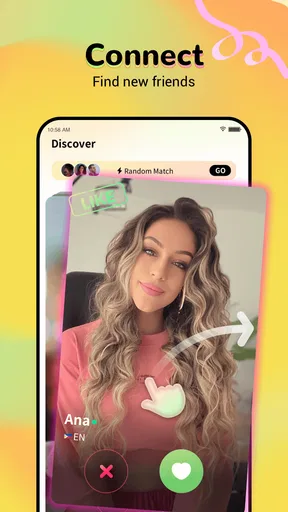
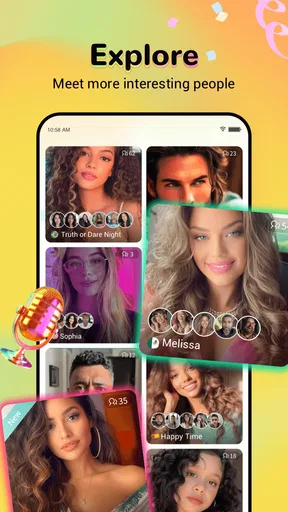
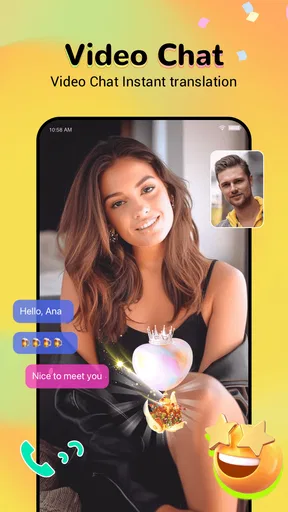
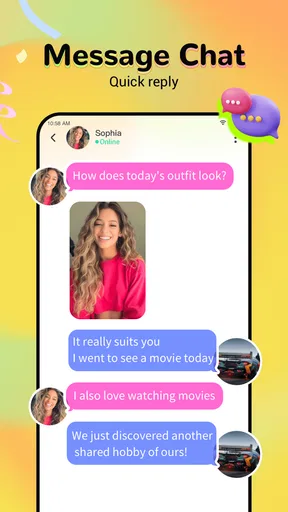

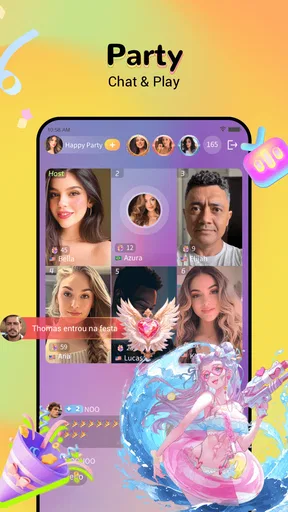
 Analysis by AppCompare
I approached Amigo as a social discovery app rather than another messaging tool, and that distinction matters. Its basic appeal is simple: it is designed to help you meet interesting people, with chat and video-party elements making the experience more immediate than a quiet profile directory. In my experience, the attraction is the possibility of finding a conversation quickly, especially when I want something more spontaneous than posting into a familiar social feed.
Amigo is free to install and comes from Insight-Innov. It sits in the social category, carries a Mature 17+ age rating, and has reached over five million installs. Those figures suggest that it is not a tiny experiment with only a handful of early users. At the same time, a large audience does not automatically make every interaction worthwhile, so I would still approach it with sensible expectations and careful personal boundaries.
The current Android release is version 4.3.6, and the app works on Android 7.0 or later. I like that the minimum system requirement is not especially demanding, because it leaves the app accessible to people using older phones. The average rating is 4.3 from roughly eight thousand ratings, which gives a reasonably positive overall impression without suggesting that every user has the same experience.
How the current experience feels in everyday use
I find the everyday experience easiest to judge when I treat each visit as a brief opportunity to explore, rather than a commitment to keep chatting. That mindset makes it simpler to notice whether the people and pace suit me, while keeping my time and personal boundaries in my hands. It also leads naturally to a closer look at how I would handle the app on a device that other people in my household use.
A social app built around discovery rather than an existing circle
The main difference between Amigo and familiar social networks is the starting point. On a conventional platform, I usually arrive with a list of people I already know, then browse updates, comments, or shared interests. Here, the more important question is who I might meet next. That makes the app feel less like a personal noticeboard and more like an open room where conversations can begin with strangers.
That format can be refreshing when my usual social apps feel repetitive. I do not need to wait for a friend to post something or hope that somebody notices my update. The discovery focus encourages a more active habit: look around, decide who seems approachable, and start a conversation. The trade-off is that the quality of the experience depends heavily on the people available at the moment. A discovery app cannot manufacture chemistry, and even a polished interface cannot guarantee thoughtful conversations.
The chat and video-party angle also changes the pace. Text is useful when I want to think before replying, while video-oriented interaction is better suited to people who enjoy a livelier, more expressive format. I would not treat those two modes as interchangeable. Someone looking for relaxed, asynchronous messaging may find the video emphasis more demanding, while someone who dislikes appearing on camera may prefer to stay with text or skip the app entirely.
Worth Reading Before You Choose

EA SPORTS FC Mobile 26 Is a Bigger Football Game, but It Takes Time

Flipboard Shows What News Apps Must Do Beyond the Feed

Switching to Android Auto Means Rethinking Your Driving Routine

Google Calendar Makes a Crowded Week Easier to Manage

Ludo King Makes the Most of the Minutes Between Plans

Baby Panda World Brings Quick Play to Modern Phones, but Its Game Library Feels Busy
Where it fits into a normal day
A realistic use case is a short break after work or study. I might open Amigo with fifteen minutes available, browse the social space, and look for one conversation instead of trying to maintain a large network. That is a better fit for the app than expecting it to replace every other communication service on my phone. It works best as an optional place to meet people, not as the central archive of my relationships.
Another useful situation is when I have moved to a new area or simply want conversations outside my established circle. Traditional messaging apps are excellent once I know somebody’s number or username, but they are not designed to introduce me to unfamiliar people. Amigo addresses that first-contact problem more directly. I still need to make the effort to communicate clearly, and I should not assume that a promising first exchange will become a lasting friendship.
My practical advice is to enter with a small goal. Instead of trying to collect contacts, I would look for one respectful conversation and leave if the atmosphere is uncomfortable. That approach reduces the pressure to perform and makes it easier to judge whether the app is actually adding something useful to my routine.
What the developer’s current release tells me
The presence of version 4.3.6 shows that Amigo has moved beyond its first public build and is being maintained as an ongoing product. That is relevant for existing users because social apps depend on continued attention: accounts, conversations, discovery tools, and video experiences all need a service that remains active rather than being abandoned after launch.
The app was released on July 30, 2024, so its product history is still relatively recent. I would interpret the current release as evidence of continued development, not as proof that every rough edge has been solved. A version number can show that the app has evolved, but it cannot tell me whether the changes are substantial, cosmetic, or focused on behind-the-scenes stability. I would therefore judge the present experience on its usefulness today rather than assuming that future updates will fix every limitation.
For someone already using an earlier build, updating is the sensible way to stay aligned with the current experience. For a new user, the more important point is that the app is not being presented as a frozen one-off release. Its ongoing versioning gives me more confidence than an app that has visibly stopped changing, although I would still keep expectations realistic about how quickly a social community can improve.
The effect on people who already have accounts
Existing users are likely to notice the value of continuity more than newcomers do. If I have already found conversations I enjoy, a current release matters because I want access to the same social environment without feeling that the app has been left behind. The benefit is not merely a new button or a refreshed screen; it is the possibility of a more dependable place to return to.
There is also a less obvious adjustment. As a social app grows, the mix of people changes. More installs can mean a wider range of personalities and more chances to find a good match, but it can also make the experience less predictable. The audience may include people seeking genuine conversation, people looking for entertainment, and people whose intentions are unclear. I would not confuse growth with automatic improvement in conversation quality.
For returning users, I recommend reviewing the way they share information rather than assuming familiarity equals trust. A person I have chatted with for a while is still someone I met online. I would keep early conversations inside the app, avoid sharing identifying details too soon, and treat requests for money, private images, or urgent favors as warning signs. Those habits are especially important in a service centered on meeting people beyond an established friend group.
Free entry, with a payment decision later
The free price makes it easy to test the basic idea without committing money at the start. That is a genuine strength: I can decide whether the available community and conversation style suit me before treating Amigo as part of my regular social routine. The app also includes in-app purchases ranging from twenty cents to nearly two hundred and fifty dollars per item, so I would pay close attention before confirming any optional transaction.
The wide purchase range is the clearest reason not to tap through payment screens casually. I would first use the free experience, identify what I actually need, and check the final amount every time. If I were setting up the app on a family device, I would be especially careful because the Mature 17+ rating already signals that this is not a service I would hand to a child without supervision.
Compared with a standard free messenger, Amigo may offer a more direct route to meeting unfamiliar people, but a conventional messenger is usually easier to understand financially because its main purpose is communication with contacts I already know. Compared with a social feed, Amigo is more focused on one-to-one or group interaction, yet it may feel less comfortable for people who prefer passive browsing. The right choice depends on whether discovery is the feature I actually want.
Privacy, comfort, and the video decision
Video-based social interaction deserves a separate decision from ordinary chat. Before joining anything live or camera-oriented, I would check what I am showing in the background, remove visible personal documents, and avoid revealing my location through windows, uniforms, or distinctive surroundings. These are simple precautions, but they are more useful than relying on a friendly first impression.
I would also decide in advance what I am not willing to discuss. That makes it easier to end an uncomfortable exchange without negotiating with myself in the moment. If another person becomes pushy, sexual, threatening, or repeatedly ignores a boundary, I would stop engaging and use the app’s available safety controls rather than trying to win an argument.
The Mature 17+ rating is important context, not a guarantee that every interaction will be suitable for every adult. I would still expect variation in behavior and conversation topics. Someone who wants a tightly controlled professional network, a family-friendly community, or a private group made entirely of known contacts would probably be better served elsewhere.
Small habits that make discovery less frustrating
One useful way to approach Amigo is to treat the first message as a filter, not a performance. Instead of sending a vague greeting to many people, I would refer to something visible in the person’s presentation or ask a low-pressure question. That gives the other person an easy way to respond and helps me identify quickly whether there is any shared interest.
I would also avoid judging the whole app from a single quiet session. Social discovery depends on timing, and a slow moment may say more about who is available than about the service itself. If the app feels empty or repetitive, I would return at another reasonable time before deciding that it has nothing to offer. However, I would not keep forcing myself to use it if several sessions consistently feel uncomfortable or unproductive.
A second advanced habit is separating curiosity from commitment. I can enjoy meeting somebody without immediately moving the conversation to another platform. Keeping early exchanges in one place gives me more control and makes it easier to step away. It also prevents a common mistake: giving a new contact access to several personal channels before I know whether the interaction is respectful.
A third is to use video selectively. I would not turn on the camera simply because the format encourages it. Text can reveal whether somebody listens, respects boundaries, and contributes to a conversation before I decide whether a more exposed interaction is worthwhile. For me, that sequence creates a better balance between the app’s spontaneous side and basic personal safety.
Where the experience still has gaps
The biggest limitation is inherent to the concept: meeting interesting people is unpredictable. Amigo can put discovery in front of me, but it cannot guarantee compatibility, honesty, or sustained attention. If I am looking for a dependable way to communicate with close friends, I would choose a normal messenger. If I want carefully organized professional networking, I would choose a service built around work identities and career goals.
The video-party format may also divide users. People who enjoy lively group interaction can find it more engaging than scrolling through posts, but people who prefer privacy, slower replies, or written conversation may experience it as pressure. That is not a minor preference; it affects whether the central interaction style feels natural or exhausting.
There is a financial gap as well. Free access is helpful, but the presence of optional items across such a broad price range means I would not recommend using the app impulsively. Anyone who is easily drawn into digital purchases should set a firm personal limit before exploring paid options. The app is easier to recommend when the user is comfortable treating purchases as optional rather than necessary for social participation.
I would also be cautious about interpreting the 4.3 average as a personal guarantee. An overall rating can indicate that many people find value in the app, but it cannot predict the quality of my local or current interactions. Social products are unusually dependent on audience mix, timing, and individual expectations, so the free entry point is more useful than the rating alone when deciding whether to try it.
What I would watch as the app continues to evolve
With version 4.3.6 as the current release, I would watch how future updates affect the balance between discovery and control. The most meaningful progress would be anything that helps people find suitable conversations without making the experience feel noisy, intrusive, or difficult to manage. I would value clearer ways to control who can approach me, especially when video is part of the interaction.
I would also pay attention to whether returning users feel that the community is becoming more consistent. A growing install base can create opportunity, but the long-term health of a social app depends on people finding enough respectful conversations to come back. If the experience becomes dominated by interruptions, pressure, or low-effort messages, the headline audience size will matter less to me than the quality of the actual sessions.
Finally, I would look for transparent handling of paid elements. Since purchases can range from very small amounts to nearly two hundred and fifty dollars, clear confirmation and understandable choices are essential. I would consider that an important part of the product experience, not an afterthought, because trust is especially valuable in an app where users are already deciding how much personal attention and information to give strangers.
My recommendation after using it
I would recommend Amigo to adults who genuinely want to discover new people and are comfortable with a social environment that can move from text conversations toward video or group-style interaction. The free starting point makes experimentation easy, the Android requirements are approachable, and the app’s current version shows that Insight-Innov is continuing to develop it rather than leaving it at its initial release.
I would not recommend it to somebody who wants only private communication with existing friends, a strongly curated professional network, or a completely predictable community. I would also suggest skipping it if video interaction feels stressful or if optional purchases are difficult to resist. In those cases, a familiar messenger or a more focused social service would be a better match.
My final view is positive but measured. Amigo is most useful when I treat it as a doorway to conversations, not as a promise of instant friendship. I would start free, keep personal details private, use text to establish trust, and move to video only when I feel comfortable. Used that way, it offers a worthwhile alternative to ordinary social feeds, while its unpredictable audience, mature environment, and broad purchase range are good reasons to stay selective.
Pros
- Easy matching with people who share your interests
- Video chats make conversations feel more personal
- Interactive party features help avoid awkward silences
- Simple interface is suitable for first-time users
- Useful blocking and reporting tools improve user control
Cons
- Some features may require coins or in-app purchases
- User quality and activity can vary by location
- Video calls may consume significant mobile data
- Unwanted messages or invitations can still appear
- Privacy depends on how much personal information you share
FAQs for Amigo - Chat & Video Party
What is Amigo - Chat & Video Party, and how does it work?
Amigo - Chat & Video Party is a social entertainment app focused on meeting people through live video, voice conversations, messaging, and interactive party-style rooms. After creating a profile, you can browse available users or rooms, join conversations, and use social features to connect with people who share similar interests. The exact features may vary by region and app version.
Is Amigo - Chat & Video Party free to download and use?
The app is generally available as a free download, but some features may require in-app purchases, virtual coins, gifts, subscriptions, or other paid options. These extras can be used to access premium interactions or support creators and hosts. Before spending money, check the current pricing, purchase terms, and whether recurring subscriptions are enabled through your Google Play or App Store account.
Is Amigo - Chat & Video Party safe for children and teenagers?
Because Amigo is designed around meeting and communicating with other users through live or direct interactions, it may expose users to unfamiliar people and unpredictable content. Parents should review the app’s age rating, privacy settings, community rules, and reporting tools before allowing access. Younger users should be supervised, avoid sharing personal information, and never agree to meet online contacts in person.
What permissions and personal information does the app require?
A social video app may request access to features such as the camera, microphone, notifications, photos, and possibly location or contacts, depending on which functions you choose to use. You can normally deny permissions that are not essential, although video and voice features will not work without camera or microphone access. Review the privacy policy and device permission settings before creating a profile.
What should I do if I encounter inappropriate behavior, scams, or unwanted contact?
Do not share passwords, payment details, identification documents, your home address, or other sensitive information with people you meet in the app. If someone behaves abusively, requests money, sends inappropriate material, or pressures you to move the conversation elsewhere, stop communicating and use the block and report tools. Keep evidence when possible, and contact official support if the problem involves payments or account security.


